One of the building blocks of modern society is certainly the invention of the written word. In my Timeline project I tried to trace back human history as much as possible, and for every culture this became significantly easier once they started to document their words in some written form.
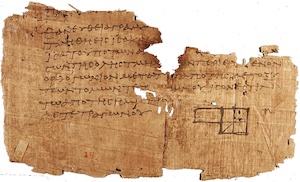 But this does not only apply for entire civilizations, but individuals as well. Correspondences on old papyri, for example found in Oxyrhynchus or letters on clay ostraca like the Lachish letters give an insight on life of the people there, and helped them document their businesses. The four largest moons of Jupiter are called Galileans, not because he was the first to observe them (Simon Marius observed in November 1609, written record on 29 December 1609 - in Julian calendar, equals 8 January 1610 in the Gregorian calendar) but because we have Galileo’s notes from 13 January about the Jupiter moons. The project Jupyter took inspiration in this history for their name, in combination with the digital notebook being interactive and also supporting Python.
Here are the links to each year, highlights and statistics follow below.
2020s
2020, 2021, 2022, 2023, 2024, 2025, 2026
2010s
2010, 2011, 2012, 2013, 2014, 2015, 2016, 2017, 2018, 2019
2000s
2000, 2001, 2002, 2003, 2004, 2005, 2006, 2007, 2008, 2009
1990
1990, 1991, 1992, 1993, 1994, 1995, 1996, 1997, 1998, 1999
1980
1980, 1981, 1982, 1983, 1984, 1985, 1986, 1987, 1988, 1989
1970s
Statistics
By the end of 2025 I have lived 18,302 days. Of these I have already documented 5 days. More details at Statistics of my diary, projects and other stories.